 manager@rhinovehicle.com
 +86 150-5314-5819

Why This Specification
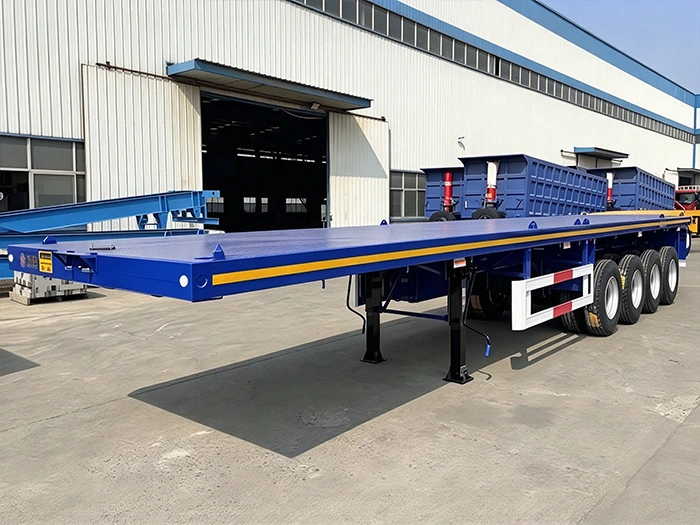
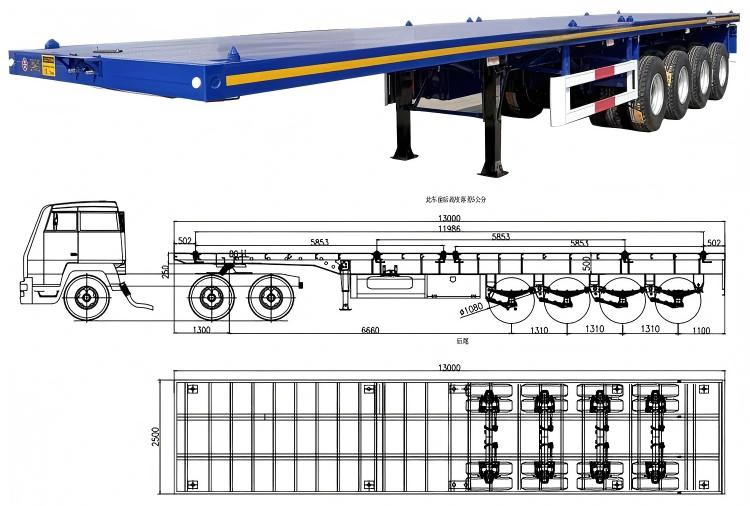
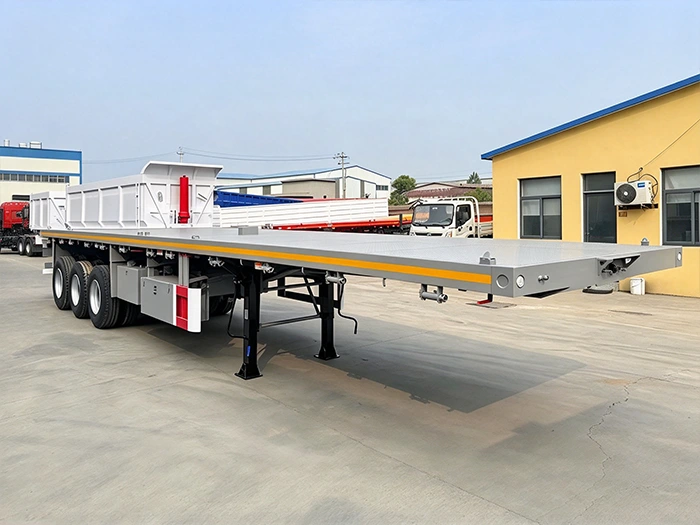
Specified with ≤80T rated capacity, 4-axle configuration, a 13000x2500x1460mm deck. Buying a trailer is easy. Buying one that still does its job in year five, on the routes you actually run, is a different exercise — and it is the one that decides whether the capital was well spent.
Most operators discover the difference after delivery, when the first load has to be refused or the first part has to be ordered from overseas.
What It Costs to Buy Wrong
An under-specified trailer does not fail once. It fails in small, recurring ways: a load that has to be re-routed, a repair that takes a week because the part is not local, a resale value that has quietly collapsed.
Those costs never appear on a single line of the accounts, which is exactly why they are so easy to ignore at the point of purchase.
How This Trailer Solves It
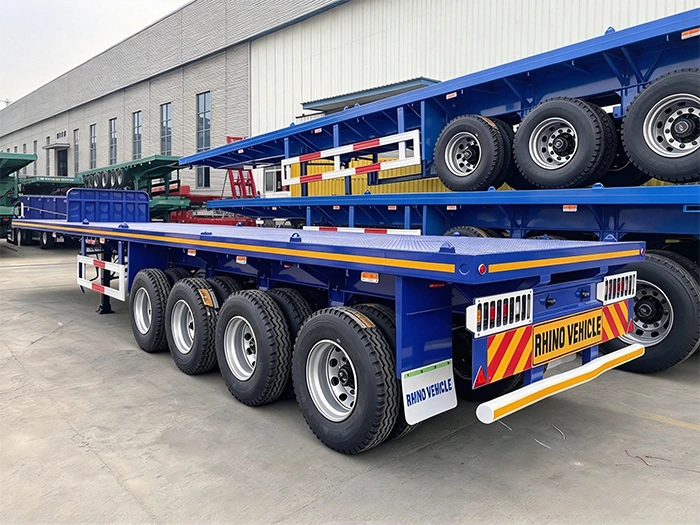
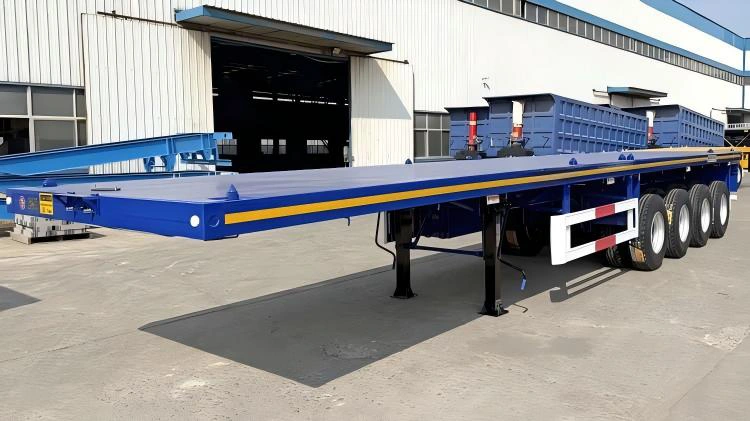
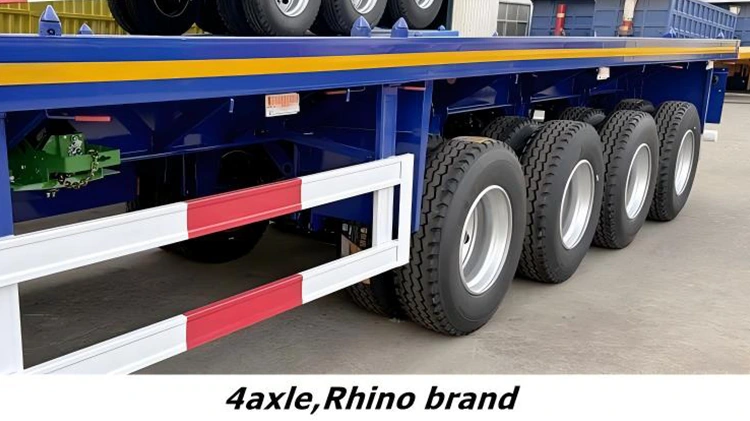
This unit is specified around the work rather than around the price. Key figures: Dimension(mm) 13000x2500x1460mm; Loading capacity(ton) ≤80T; Axles 4axles, Rhino Brand; Tire 16 units, 12R22.5; Suspension Mechanical suspension; Landing gear JOST.. Each element is there because it carries a load path or a wear surface, not because it fills a specification column.
The structure is built to hold its geometry under repeated loading, and the running gear uses components that are available in the markets you operate in.
With 4 axles sharing the vertical load, individual tyre loading stays inside its rating even at gross weight.
What You Gain
What that produces is predictable: fewer refused loads, scheduled rather than forced maintenance, and a trailer that still has value when you decide to replace it.
In this configuration the 80 ton 4 axle flatbed trailer is rated at 80 tonnes, carried on 4 axles, running Mechanical suspension of 4 axle flatbed traile.
On a fixed route with a fixed rate, those three things are the whole difference between a good year and a difficult one.
Specification
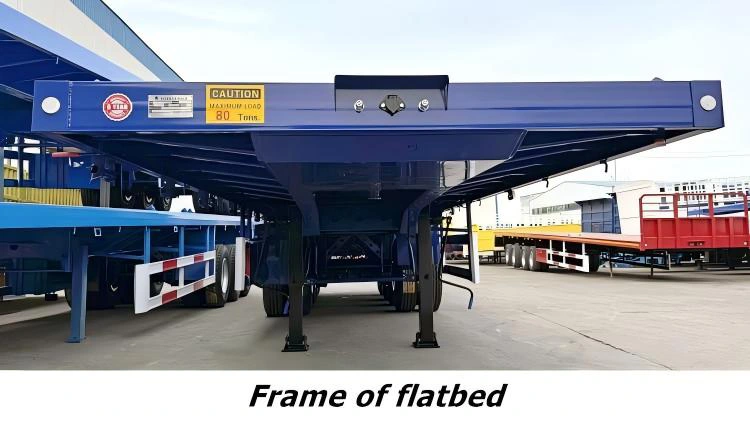
| Frame of flatbed | Frame of 80 ton flatbed trailer for sale made of high-strength steel. Designed to provide structural integrity and support heavy loads |
| Side support | Side support covered one by one, share the stress of main beam. The distance only less than 500 mm |
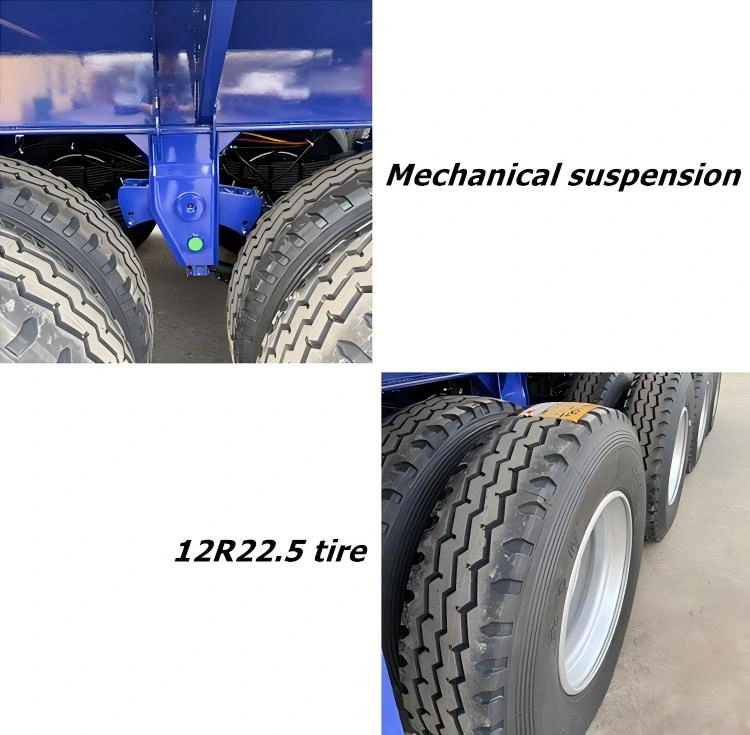
| Suspension and Tire | Mechanical suspension of 4 axle flatbed trailer provides stability and comfort during transit by absorbing shocks from the road. The 12R22.5 model tire has better load capacity and is more durable |
| Dimension(mm) | 13000x2500x1460mm |
| Loading capacity(ton) | ≤80T |
| Axles | 4axles, Rhino Brand |
| Tire | 16 units, 12R22.5 |
| Suspension | Mechanical suspension |
| Landing gear | JOST |
| Brake system | WABCO |
Dimensions and ratings are as published. Mechanical configuration may be adapted to destination market requirements.
Product Details
Construction, configuration and delivery details as published on the product page.
4 axle flatbed trailer is designed to handle an 80 ton payload, ensuring robust support for heavy machinery, equipment, or materials. The 4 axle 80 ton flatbed trailer is an essential asset for businesses requiring transportation of heavy loads. Its robust construction, high load capacity, and versatile design make it suitable for a wide array of industrial applications, enhancing efficiency and safety in heavy hauling operations.
Factory Price 80 Ton 4 Axle Flatbed Trailer.
Frame of flatbed: Frame of 80 ton flatbed trailer made of high-strength steel. Designed to provide structural integrity and support heavy loads.
Side support: Side support covered one by one, share the stress of main beam. The distance only less than 500 mm.
4 Axle: 4 axles support the weight of the flatbed trailer and are critical for its stability and weight distribution. Rhino axle has 9 years of experience in production quality, better bearing capacity and good braking effect.
Suspension and Tire: Mechanical suspension of 4 axle flatbed trailer provides stability and comfort during transit by absorbing shocks from the road. The 12R22.5 model tire has better load capacity and is more durable.
The load capacity of a flatbed trailer is determined by several key factors:
1. Structural Design.
– Frame Construction: The materials used (e.g., high-strength steel) and the design of the frame affect its ability to bear weight.
– Cross Members: The number, spacing, and material of cross members support the deck and load distribution.
2. Axle Configuration.
– Number of Axles: More axles generally distribute weight better and increase load capacity.
– Axle Ratings: Each axle has a specific load rating, which contributes to the overall capacity.
3. Suspension System: Heavy-duty leaf spring suspensions can handle different loads effectively. Proper load distribution across the suspension impacts how much weight can be safely carried.
4. Deck Material and Design.
– Deck Thickness: Thicker and more durable materials allow for higher load capacities.
– Load Distribution Features: Features such as stake pockets, tie-down points, and loading ramps affect how weight can be applied and secured.
5. Tire Specifications: Each tire has a maximum load rating that limits how much weight it can safely carry. Larger or specially designed tires can increase the load-bearing capability.
6. Load Distribution.
– Center of Gravity: How the load is placed on the trailer impacts stability and load capacity.
– Even Distribution: Unevenly distributed loads can lead to overloading specific axles, reducing overall capacity.
Product Gallery



 EN
LUxirhinovehicle –
very good